Wednesday, September 18, 2013

Victorian Views


John Forster goes back and forth to shed light on Browning’s attributes and on his flaws. He first shares the idea of Browning being a man of genius. He says that his poems will live on due to his use of the natural use of his philosophies and dramatic writing style. Forester says that no one even thinks of Brown as the speaker once they are reading because they are so caught up in the poems and the dramas that are displayed. He then goes on to say that Brown has made a situation that he had never hoped for. There is now a standard for his poems in a dramatic sense that Forster does not think Brown wants or can uphold to. This idea of a dramatic test suggests that this is the only way that Brown will find an audience to still read his poems. Therefore, standards with poetry are created to always show and relate theses emotions and great dramas. This then questions Brown because he does not want to always be given this standard does this question him as a poet all together?
Thomas Carlyle writes a letter to Brown about his poetry and his opinions regarding his own writing style, Carlyle sees Browning as having a special gift that he says shine through in his writings. However, he says to stay true to the writer that Brown is because that is what makes him an impact on literature. Carlyle’s way of wanting more for Brown and seeing a potential in him suggests that Brown is almost selling himself out for what is popular instead of staying true to his intellect. This battle is something that Carlyle thinks Brown needs to overcome because Brown will lose his purpose as a poet can change the whole dynamic of what his writing is supposed to represent.
William Morris starts out to show how angered he is and his values based on intellect are strongly addressed. He is responding to the great deal of criticism that is following Brown’s reputation as a poet. He is upset by the way that he sees this criticism attacking the way of Brown’s writing. However, Morris does seem to agree that the style of Brown’s writing is very hard to follow in some cases, but he does not want to change the initial integrity of the writing. The argument that people do not want to challenge themself and see poetry as anything more than light reading sets a tone for poetry. The attitude towards poetry creates a sigma that poetry cannot stand up to the same standards as other literature. However, without poetry so many of the great authors would be lost. Therefore, poetry can be argued to be a more intellectual reading because of the differences and challenges it creates for the reader.

Friday, August 30, 2013

Jennifer A. Wagner-Lawlor's opinion of the silence surrounding Dramatic Monologues


In the essay The Pragmatics of Silence and the Figuration of the reader in the Browning’s Dramatic Monologue the author Jennifer Wagner-Lawlor gets to the very depth of her interpretation of what that silence means. She regards Robert Browning by acknowledging that he was an author in the nineteenth century that used dramatic monologue as one of his most famous and powerful writing tactics. However, Wagner gets into the meaning behind what the dramatic pauses really meant in these monologues. Wagner states “my argument is that dramatic monologue thus constructs the image of the audience through the very silence it enforces upon the textual auditor.” By this argument Wagner is suggesting that the readers are being put in this mind set where they are forced to listen to the speaker and the auditor while having to stay silent as well. However, Wagner hopes to break away from this silence and challenge the audience to find what irony and meaning can be found within that silence. Wagner then goes on to point out her second point in the argument to be, “the auditor is participating not in a voluntary or ‘chosen’ silence but in the linguistics call ‘imposed’ silence.” This imposed silence is one that shows influence or supremacy from the speaker to the reader. Wagner wants to influence readers away from this manipulation so that the audience becomes more active and makes their own conclusions without being told by the speaker to do the traditional “enforced listening” that is presumed in dramatic monologues.
            Through this essay Wagner is demonstrating this need to make an active audience and for all readers to find their own voice within what they read. Even though the dramatic monologue is traditionally known for its ability to control a reader, especially through silence, Wagner gives reason to instead control the reading. If a reader is being controlled and forced to feel emotion through this silence then the speaker and auditor possess all of the power. Therefore, it is the duty for the reader to go beyond what is on the surface and dig deeper to find more meaning through this silence. By questioning what irony the silence’s timing or the placement of the silence then going forward to find that meaning is what makes a better audience or reader. This is due to the fact that an active reader is then created in this dramatic monologue. If the readers stay inactive and abide to the speaker they are handicapping themselves to the speaker’s points in Wagner’s eye. If the reader does not want to be controlled by dramatic monologue then it is their duty to find words in the silence.

Monday, August 26, 2013

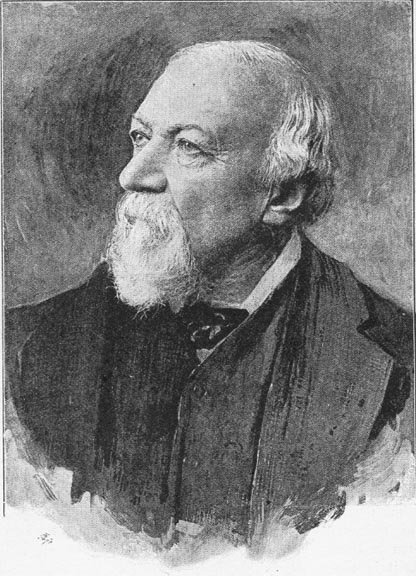
Robert Browning's Biography


                Robert Browning was born May 7, 1812 in Camberwell, an area that is just outside of London. His was the first son to Robert and Sara Browning which were two individuals that lived a modest lifestyle, but were very encouraging in aspects regarding education. Robert browning was a very well read child and became fluent in languages including French, Latin, Greek, and Italian due to such advance readings. The first year that the University of London opened Robert attended; however, he left shortly after to pursue his intellect at his own set pace and desire.
                Browning was a writer that always followed his own style of writing and relied on his interests to inspire his type of writing. Due to his creativeness it was sometime difficult for audiences to follow his works; therefore, Browning found his writing many times criticized and misunderstood.  Many times Browning found this criticism when writing for stage dramas. However, through his trials Browning found he had a talent for taking a specific character out of the drama and feeding off just there personal thoughts. This technique was something that Browning enjoyed and worked on mastering because of the personal level that became created between the character and the audience. These works are also known as soliloquies. Browning’s works that created much attention were Paracelsus in 1835 and Sordello in 1840. There was some debate that Browning was doing too much and these ideas were too complex and long. However, Browning still worked to perfect his writings because he enjoyed the idea of mastering the inner thoughts of his characters to then be portrayed honestly and openly to an audience.
Robert Browning became infatuated with Elizabeth Barrett in 1845. He loved her writing, and after meeting with her and spending time with one another he began to love her. They were married in 1846 and lived in Italy until the death of Elizabeth in 1861. Elizabeth may have been more successful in her lifetime than Robert, but He never stopped his writings and researching and became well known for Collected Poems, Dramatis Personae, and The Rind and the Book after Elizabeth’s death.


Works Cited

Everett, Glenn. The Victorian Web. 7 May 2007. Web. 25 August 2012.

Sunday, August 25, 2013

Elizabeth Barrett Browning Biography


Elizabeth Barrett Browning            Elizabeth Barrett Browning was born March 6, 1806 in Durham England. Elizabeth was born into a well off family where she was able to enjoy a more privileged childhood. She had both a mother and a father influence in her life; however, her mother died when Elizabeth was twenty-two years old. Different critics and scholars claim that Elizabeth translated her mother’s death through her writhing of Aurora Leigh. Due to her fortunate upbringing Elizabeth became a very well read child a teenager through Shakespeare, Greek and Latin authors, and different religious literatures. Her wonderful insight, especially for a woman at this time, allowed Elizabeth to get an idea of what kind of author she would want to become.
            Elizabeth had different health problems and faced a time after her brother’s death where she spent five years in her bedroom allowing almost no visitors. In 1844 some of Elizabeth’s most famous poems inspired the author Robert Browning to write Elizabeth. He raved about how much he loved her poems and the inspiration that she created on him. Robert came to visit Elizabeth which then started one of the most famous loves in literature. In August of 1846 the two were married and their love inspired further writing of both of the authors.
            Elizabeth’s poetry took off and was becoming such a success. Her challenges that she faced through social inequalities made a vital influence on some of the famous poetry shared by Elizabeth. Some of these famous poems include Casa Guidi Windows and Poems Before Congress. These poems play a part in a liberal view regarding the fight for Italian independence and the fights that Italians faced from the Austrian government. Elizabeth Browning was very famous for her voice in her poetry. Aurora Leigh, as mentioned before, deals very much with of the social parts of unfairness that she herself faced making it one of her most famous pieces of writing. Her own personality shining through in Elizabeth’s poems made the writings so much stronger.

Works Cited                                                  

Everett, Glenn. The Victorian Web. 6 April 2002. Web. 23 August 2013.
Elizabeth Barrett Browning Biography. June 2004. Web. 23 August 2013.